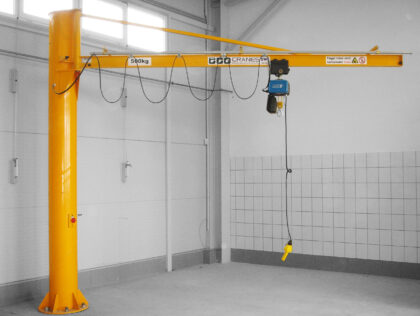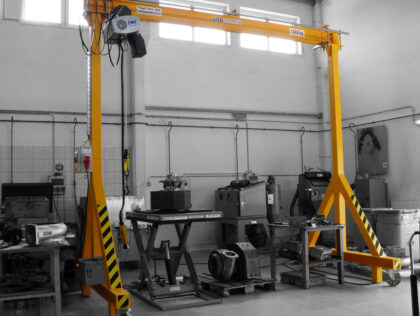

One of the great advantages of mobile forks and mobile elevators is that their position can be changed relatively easily and quickly depending on the loading and lifting. Most hoists and cranes, however, are fixed, and it is very common for them to have a reinforced concrete base or concrete canopy.
Three (or four) simple ingredients
The smooth concrete is basically made from three basic ingredients, gravel, cement and water is required, but as already mentioned for steel, reinforced concrete structures rolled are reinforced with steel bars, so the fourth material is the steel.
A Waterwe wouldn't waste many characters on it, because absolutely clear. The other two materials are much more exciting.
A gravel a mixture of river sand and gravel. Different grain sizes of gravel are recommended for different types of concrete, but care should always be taken to ensure that the gravel used no clay or other contaminants as they will degrade the quality of the finished concrete.
A cement the concrete binder, perhaps the most important ingredient. The dry, powdery cement, when mixed with water, solidifies and holds the concrete firmly. Before buying and using the cement, it is important to make sure that the driest possible cement because it can only bind with water once, after which it loses this property. The longer cement is stored, the more moisture it absorbs from the air and its environment, and the weaker it becomes.
The ratios
The proportions of concrete mixing are most often determined by the cement and its unit of measurement.
According to good practice for one unit of cement, one third of a unit of water and three units of gravel is required, then rotate the concrete mixer until a paste of uniform consistency is not formed from the ingredients.
By varying the proportions, concrete of different quality and durability can be produced.
The preparation
However, no matter how good the concrete is, if it's not placed on a properly prepared base, it's worthless.
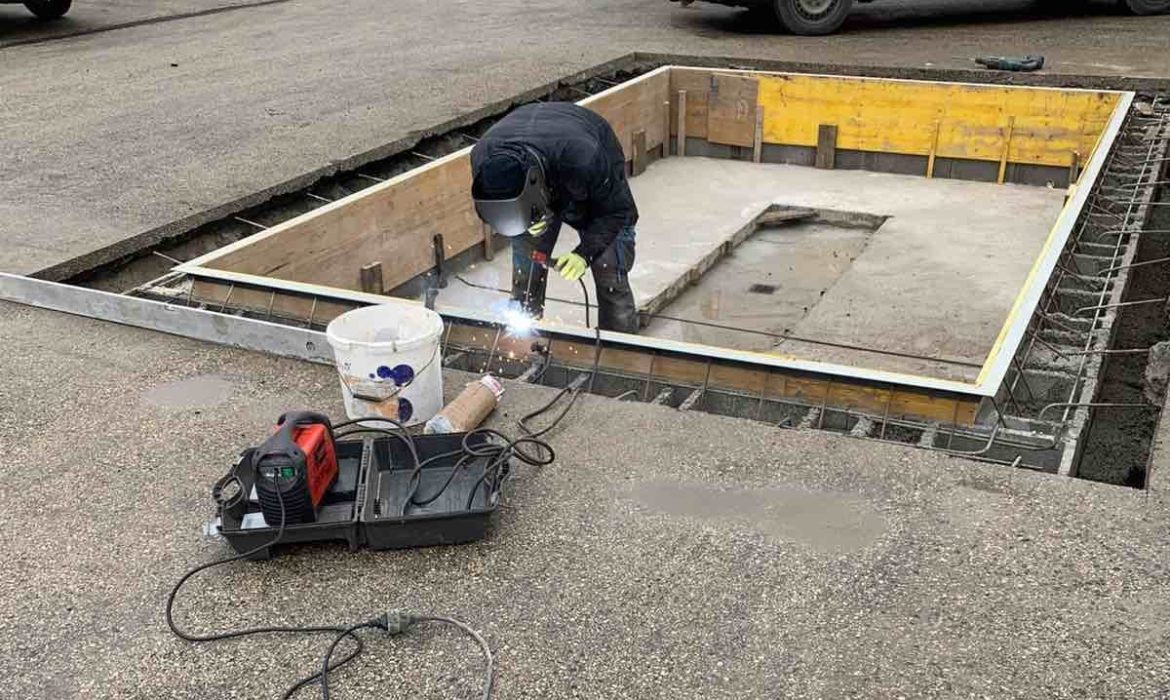
An hydraulic Lifting for example, to fix it, you have to dig up its location, to spread gravel and then knock it over, to make the structure sufficiently stable.
This is followed by the shuttering, preparing the concrete for pouring. The slats and planks used in the past have now been replaced by much more professional formwork materials.
Once these are properly secured and braced, the possible reinforced concrete reinforcement, flat mesh or wreath welding.
Once this is done, the concrete can be poured. An important moment is the aligning and tamping the concrete during pouring, generated during mixing removal of air bubbles, to make the concrete more durable.
Aftercare
The pouring of the concrete is not yet complete, as the fresh concrete must dry out, namely slowly and gently.
To do this for the specified time must be kept moist the concrete to ensure that it will hold the attached lifting structure firmly for a long time after drying and removal of the formwork.
Advanced technologies
Larger quantities of concrete or special needs (such as a bridge crane or a Lifting fixing), local concrete mixing is of course no longer widespread, and has been replaced by the involvement of professional concrete producers and suppliers, which are the most concrete mix of appropriate consistency and quality are able to deliver on the requested date in the predefined quantity.