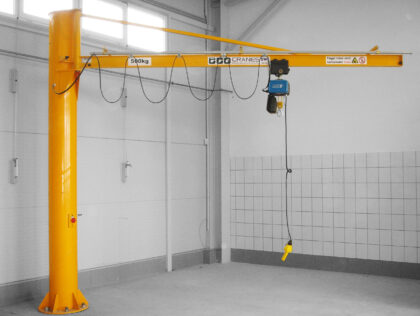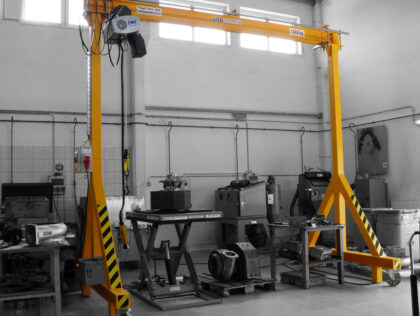

The process of lifting loads is always a dangerous operation, so everything must be done to ensure safe operation. As the subject cannot be covered enough, in this post we will look at the technologies manufacturers use to prevent accidents in the workplace. Safety solutions on cranes and other lifting equipment from the most basic to the latest developments.
Used on the factory floor fitting lifting equipment with the appropriate safety devices and operating them as prescribed is a priority in the workplace accidents, and to prevent damage to cranes and the load they move. A safe operation has two basic conditions.
On the one hand, operators and those working around the crane must be properly trained and regularly retrained. On the other hand, it must be ensured that the lifting equipment is equipped with the necessary safety systems.
Workers
The first group of security devices are crane operators and the workers in the field of work to help protect.
These include horns and beacons on the cranes to warn people in the work area that the load is being moved, or radio control to allow the crane operator to keep an appropriate distance from the machine and avoid getting the object being moved caught between obstacles.
Crane and cargo
Separate systems protect the integrity of the lifts and the objects they move:
- Collision avoidance systems: sensors on the cranes monitor the crane's position and help prevent it from colliding with end stops, other cranes or other obstacles in the work area.
- Anti-skid systems: to prevent jerking due to sudden starts or stops.
- Load cells: to help crane operators get accurate information on the weight of the load and avoid overloading.
- Brake sensors: continuously monitor the condition of the brakes and send a warning if they slip, so that the necessary maintenance work can be carried out in time.
New ideas
Although many systems are already available, the development of security solutions has not yet stopped. Manufacturers are constantly working on new developments. One example is the suspension centre monitoring system, which checks the position of the load and then warns if it is not properly attached and could cause an accident or damage the crane's components by swinging out of position after take-off.
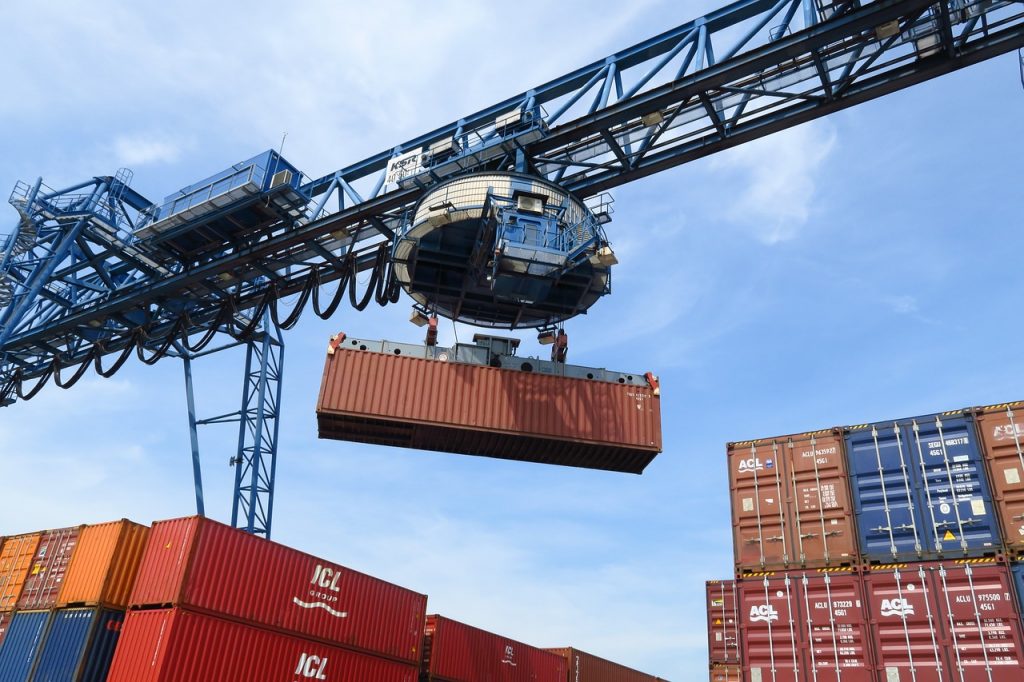
(source)
Some security systems already use IoT technology. Once the appropriate sensors have been installed, the crane operator can control, via an app's graphical interface, which part of the worksite the bridge crane can move and at what height. This prevents collisions caused by crane operator error, as if the crane is directed towards a forbidden zone, it simply stops before it reaches it.
Is it safe enough?
Always worthwhile Review at, that the lifting equipment used in our work area is equipped with modern and appropriate safety systems. If it is necessary, it is worth opting for an upgrade, as it will also improve working conditions for workers in the field and reduce accident costs.
Source of the featured image: Pixabay!