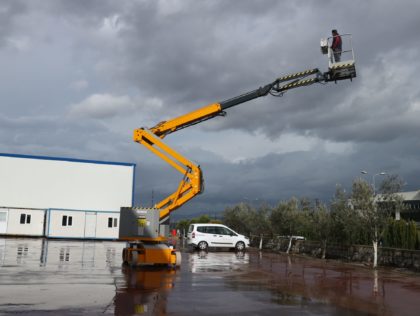


Cranes are extremely powerful pieces of equipment that can lift very heavy loads and make construction work much easier. However, cranes and the lifting itself are also potentially dangerous, as the cranes and the loads they lift and move can cause damage if not handled properly. Accident statistics published from time to time highlight the importance of load lifting safety at all stages of the process, including transport, anchoring and lifting.
By following these 9 basic rules, you can significantly reduce the dangers of crane operation.
1. Choose the right crane for the job!
Ensuring safe crane operation starts with choosing the right crane. Cranes can be mobile or fixed. The latter are typically used in industrial environments, complex or high-rise construction projects. There are also many different types of mobile cranes, so make sure you choose the most suitable crane for your site.
2. Always employ qualified staff!
Trained and qualified personnel are required to operate cranes safely. Ensure that qualified personnel who comply with the relevant regulations operate the machinery used for lifting the load. To ensure compliance, most crane hire schemes include qualified personnel.
3. Know the contents of the manuals!
Anyone working with cranes must have a detailed and thorough knowledge of the machine being operated, as different manufacturers' cranes have unique controls and features (load capacity, safety mechanisms, stabilisers, etc.).
To learn more about these operating instructions contains vital information.
4. Regular checks!
Before starting work, the operator must always checks the general condition of the crane, its engine, hydraulic and safety systems to ensure that it can be operated safely.
5. Provide a good working environment!
Before starting the crane operation, it is essential to plan the entire lifting process and clear the site of any obstacles. Non-movable obstacles (power lines, trees, etc.) must be known to the operator and kept at a safe distance at all times during the lifting operation.
When lifting the load, the crane operator must be assisted by a person in control, taking care of possible hazards.
6. Ensure proper support!
Mobile cranes use outriggers or other stabilising elements to maintain a stable position during lifting to avoid tipping. When stabilising the crane
- always follow the manufacturers' instructions;
- always rest on a stable surface;
- always use support washers under the support arms.
7. Properly secure the load to be lifted!
Proper securing of loads prevents accidents caused by falling objects. When securing, make sure that the correct Material from, size and tensile strength a rope or hevedert apply. Knowledge and application of force, weight distribution and rigging techniques ensure safe lifting of even the most irregular and heavy loads.
8. Pay attention to the load limits!
Although most modern cranes are equipped with load moment indicators and other with security systems, crane operators must still be able to read and interpret load diagrams to prepare for safe lifting.
9. Proper communication!
To facilitate the safe operation of the cranes, the operator assistant is able to communicate effectively with the crane operator about the direction and speed of the crane's travel and the details of the load lifting. Communication is most often by radio and arm signals are used.