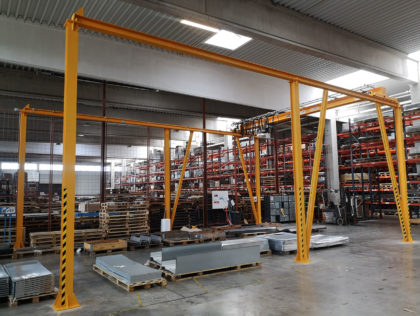

The last mile problem refers to the last stage of logistics and transport when goods are transported from the distribution centre to their final destination, which may be the customer's home or a shop. This is the last stage of the logistics chain and is often the most complex, costly and time-consuming part of the transport process. Let's see why!
The other stages of logistics, such as first mile (delivery of goods from the manufacturer to the warehouse) and middle mile (transport between warehouses or distribution points) are usually well organised, as they transport large quantities of goods over long distances, on well-marked routes, possibly with dedicated built infrastructure with the help of.
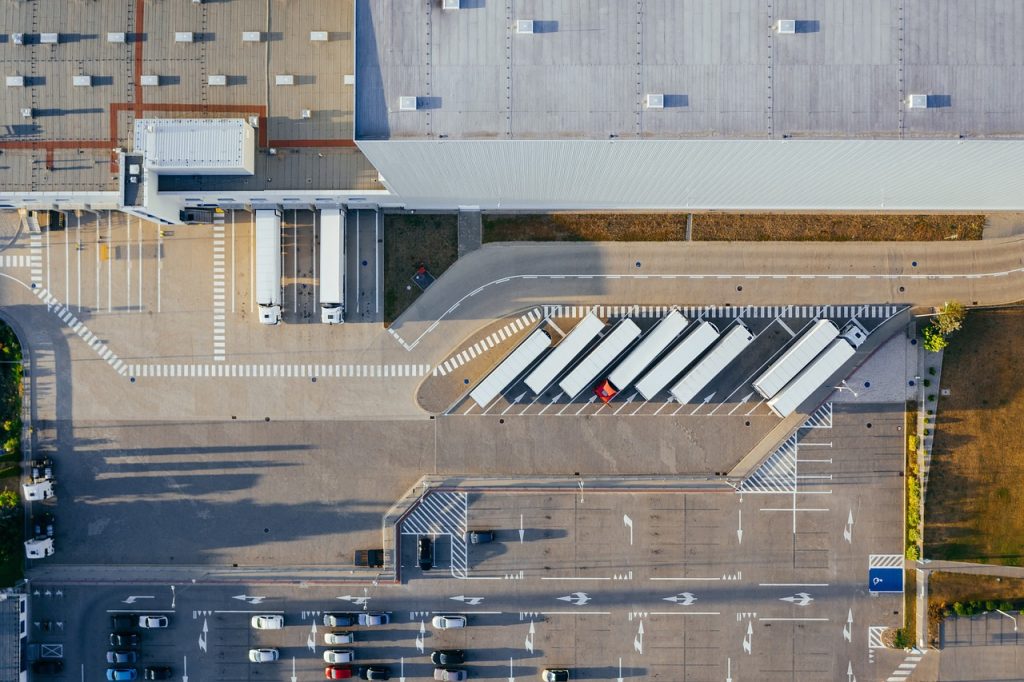
(source)
The movement of goods is easier in these sections, as the equipment used in factories and warehouses Tools, forklifts and cranes are available, unlike some of the final delivery destinations.
For the final stage is the most problematic, because it is the stage where multiple challenges arise, such as infrastructure, traffic, distances, available vehicle capacity and consumer expectations (e.g. fast delivery, traceability).
This difficulty can be overcome by special loading solutions such as the use of a tail-lift truck or a truck-mounted forklift, which can significantly facilitate the loading of goods.
The rear of a tail-lift truck is fitted with a mechanical lifting device that can be operated as a lift. The available forklift is also mounted on the back of the truck or lorry. This design allows it to take up no space from the cargo area, yet always be at hand when you need it.
Also a barrier to delivery, if the goods are heavy. This situation may exclude the loading solutions mentioned above, as they generally have a lower weight limit. In such cases, a built-in crane truck, which can both transport and deliver and unload a wide range of goods (building materials, containers), may be a solution. And if this is not feasible or the situation requires it, a separate forklift or crane can be used for delivery.
Difficulties can also arise when the delivery address difficult to access. In many cases, this can also be helped by a crane, or the use of several smaller vehicles may be a solution. In extreme cases, the use of cargo helicopters may also be an option, such as the Toronto CN Tower during construction.
The situations listed above and the solutions and their organisation contribute to to the other two elements of the last mile problem, such as time and cost.
The time-consuming the benefits of resolving, organising and managing the situations that arise. This is especially a problem as consumer demand is growing and customers want earlier delivery in all circumstances.
A final delivery is the most complex part of the overall logistical task and the most costly due to the special solutions required. For the whole process, the last mile generates about 53% of the costs.
So we can see the difficulty of this last delivery stage. It's a big task to optimise it, both in terms of time and cost, so that we choose the best solution for everyone.
Source of the featured image: Pixabay!