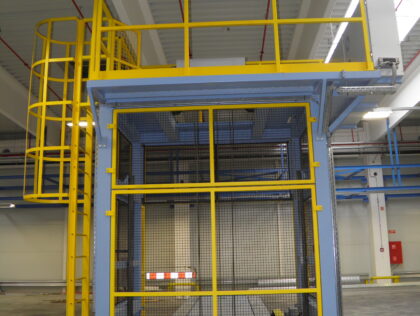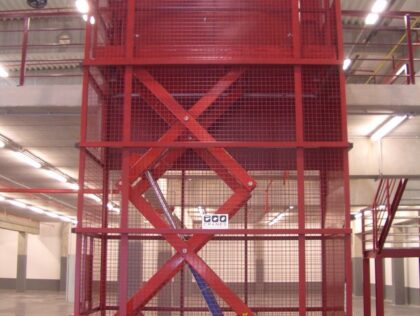

Lifting, craning, loading and moving loads is always dangerous. However, this danger is almost never the same, and can be significantly reduced by following a few basic rules.
A crane accidents are most often due to two causes: can cause them human error or structural failure of the crane.
Both sources of error can be fatal: a crane accident puts the lives and health of people around it at risk, the financial damage can be enormous and the reputation of the manufacturer significantly damaged. Let's see what can be done to avoid mistakes and prevent accidents.
Assess the risk
The installation of any lifting device - be it fix or mobile - carries some risk.
The larger, the higher the lifting device or the crane, the greater the load you want to lift, the higher the risk.
Also increase the risk of critical structures around the crane installation site or facilities, unusual, and in some cases extreme, natural conditions or weather conditions.
These are the risk factors for all project must be carefully and rigorously assessed in advance. This risk analysis should main elements for any temporary structure, answering the question of what the consequences of a failure might be.
Take action
Risk analysis cannot be a mere formality. Identifying risk factors alone is not enough. When a significant risk is identified in a project, immediate and preventive action is needed to eliminate the risk.
If this is not possible, then, as with all risk mitigation procedures, steps must be taken to minimise the risk.

Learning from mistakes
Despite all precautions From time to time, we read and hear about unfortunate crane accidents, in which people are injured or serious damage is caused to the hoist and surrounding objects or buildings.
All such cases are followed by a thorough investigation, during which experts establish the circumstances of the accident and identify the cause or causes. The expert analyses also provide a wealth of useful lessons for future crane deployments.
Operate with care
Once the crane or other lifting equipment has been carefully installed, work can start, but the operation before and Meanwhile there are also a number of rules to follow, and cannot be neglected the regular and thorough maintenance, and, if necessary, the professional bug fix sem.
Through careful consideration, a thorough assessment of the situation and the health and safety rules the potential of lifting the load risks can be significantly reduced, but can never be completely eliminated, so lifting a load will always carry some risk.