
We continue our series on weather conditions affecting the safe use of cranes. In our previous posts, we listed the effects that can affect the permanently low temperature for the lifting equipment and the people working with it staff at. High winds are another factor that can greatly affect lifting operations or even force them to be suspended.
According to statistics from the US National Institute of Standards and Technology (NIST), there have been 1,125 crane accidents worldwide over a 10-year period.
In 23% of these, the effects of strong winds were identified as the cause. So the associated security measures and, if necessary, provide the possibility to measure wind speed.
Pull-string
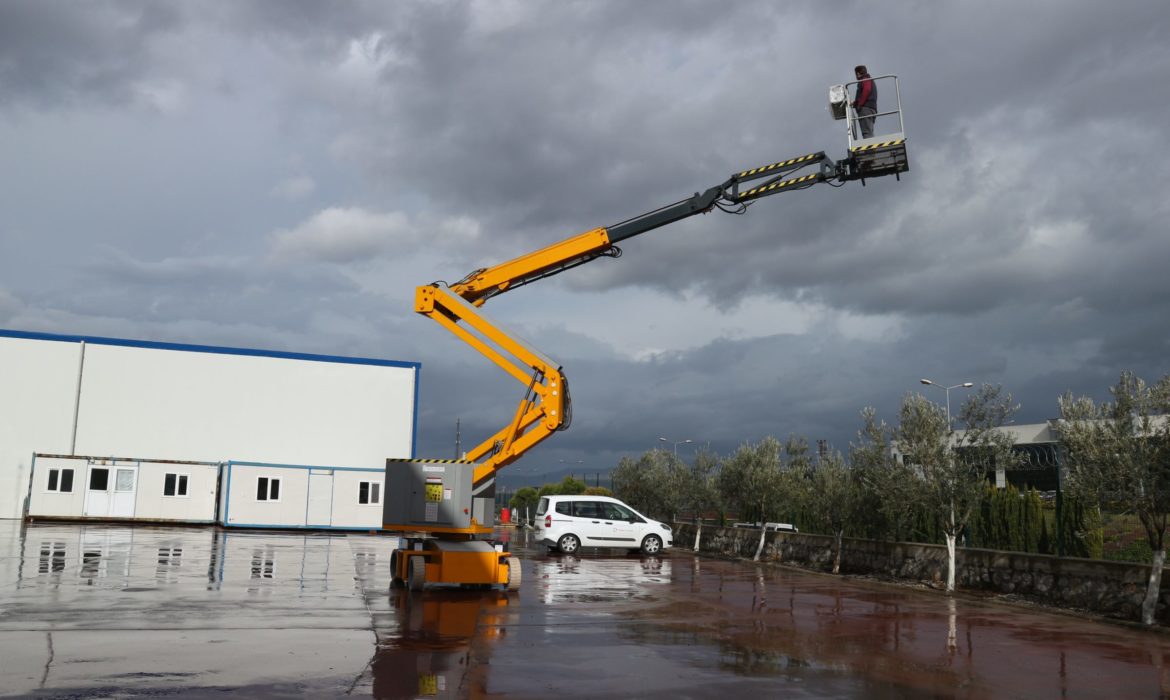
High-speed air movement, whether uniform or jerky, has a variety of effects on the lifts. Striking the crane aerodynamic pressure on its structure, and air resistance can cause horizontal movement. buoyancy which can cause the crane to rise, tilt or even tip over. In addition, the wind also have a twisting effect, which can cause damage to the base and instability of the crane.
The effects of rapid airflow are influenced by several factors besides speed.
Height matters: the higher the lifting operations are carried out, the stronger the air movement they have to withstand. The wind direction from which the crane structure and the load are exposed is important.
The weight and shape of the load is also important: the heavier it is, the more resistant it is to external influences. Another important factor is the type of crane (e.g: Toronydaru or mobildaru), the corresponding load values specified by the manufacturer, the gém length, the ellensúly mass.
How can it be measured?
To measure wind speed and wind direction, anemometers are used, either installed separately or built-in on the better equipped instruments.
They give the crane operator a real-time picture of wind conditions and help him to determine more accurately what precautions are needed to continue working or how long it is safe to operate the crane, based on the wind strength and load data provided by the crane manufacturer.
The as a general rule, lifting operations must be stopped at wind speeds above 35 km/h. If you have to work in windy weather, but still below the limit, the effects of airflow can be reduced. To maintain the stability of the crane, you can slow down its movement, reduce the lifting angle and height to bring the load closer to the ground.
Safety
Lifting work in windy weather always puts extra load on the cranes. Load capacity is reduced and parts wear out faster.
Failure to properly assess how long lifting operations can continue can be dangerous for workers, the load and the crane itself.
Therefore, it is always a good idea to plan for working in windy conditions using the manufacturers' operating guidelines and, if the wind force warrants it, to stop using the hoists immediately to avoid accidents.