
Main components of material handling systems
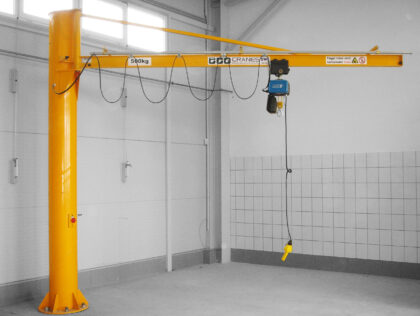
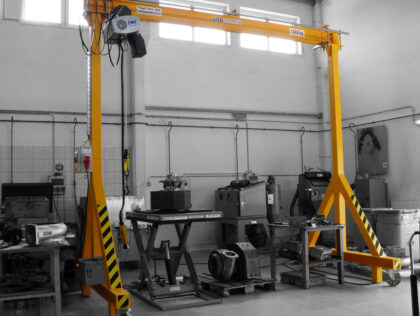
Electrically operated material handling and conveying systems usually consist of three main parts:
- engine;
- Track;
- control.
Engine
The engine is the soul of the system. According to the possibilities available single-phase or three-phase electric motor, the performance of which is always adapted to the activity of our customers, the lifting or handling activity to be carried out are determined by our staff.
We consult with our customers during the selection process and also carry out an on-site survey to gather information on the best choice of actuators, performance optimised, long-lasting and economical to run, we use them in our systems.
Track
The track designing also requires a high degree of care, because This is define the scope of the lifting or handling system, the dimensions of material handling. Throughout the design process, our engineers strive to maximise the use of available space to meet the customer's needs.
The power supply is parallel to the track, and the power supply units for the electric propulsion run on or in this track.
A the most commonly used solution is the C-rail system, in which the cable trolleys carrying the current-carrying flat cable run on a C-rail parallel to a crane runway. The complete system consists of support arms, C-rail, cable trolleys, end stops, clamps and flat cable.
Where a C-rail solution is not feasible, rope system applicable. In these, the power supply runs on a daisy chain parallel to the crane runway.
In particular recommended for use in dusty, difficult to keep clean environments slightly more protected than the C-rail, easier to keep clean square closed rail systems building.
These are the systems have many advantages due to their modular design: they are easy to install, are easy to install, they can be expanded with a wide range of accessories and are relatively easy to maintain, so they offer a very good price/performance ratio.
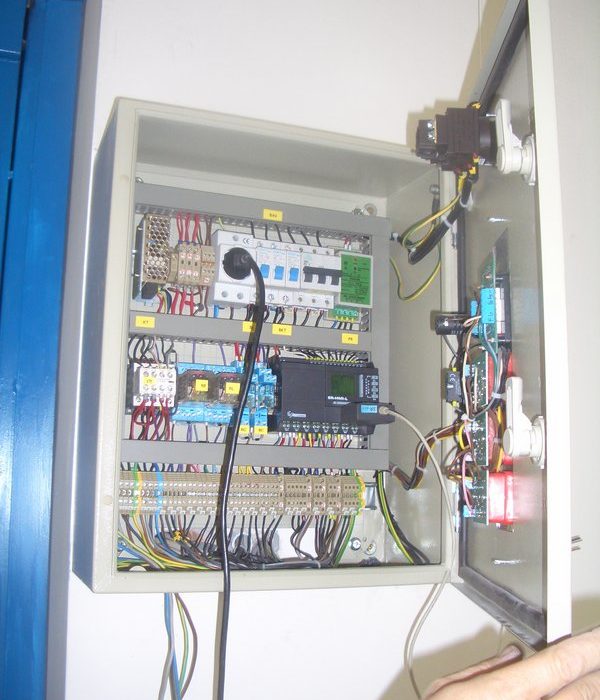
Control
There are also a number of options available for control deployment, including a by use and method of operation must be chosen.
For simpler, smaller systems, fixed installation or independent of the location of the lifting machine pendant is the most commonly used solution.
For larger horizontal or vertical areas, or for more complex systems with multiple structures, it is advisable - even afterwards - to use push-button or joystick remote control system which can wirelessly control cranes and hoists, as well as other machinery and electrical equipment, from a distance of up to 100 metres, using radio waves.