

Daruink, liftjeink and others, mechanical or hydraulic our elevators light, quiet and energy-saving movements are most often ensured by bearings. Here are some basic facts about these essential elements for lifting and moving loads.
Let's define: what is a bearing?
A a machine element for supporting bearing shafts and other moving parts, guiding and facilitating movement. The better a bearing, the lower the resistance to motion, the less energy is required to ensure motion.
During the movement they facilitate, the bearings are subjected to a number of very powerful force, the most common sources of which are:
- the mass of the rotating part;
- forces arising from imbalances;
- vibrations due to the operation of the machine;
- electromagnetism;
In addition to mechanical stress bearings have to withstand the thermal stress caused by friction of the components, as well as the thermal fluctuations of the environment, with a significant loss of performance.
Good quality bearings absorb, therefore minimise movement noise, vibration and heat build-up equally.
Grouping of bearings
Operational principle
Plain bearings
For plain bearings the axle journal - the part of the shaft that is surrounded by the bearing - the lubricant runs on a film formed on the bearing surface. The most commonly used lubricant in the operation of plain bearings is oil. They are commonly used in applications where a reliable, fail-safe, yet cost-effective solution is required. Sliding bearings can be found in many machines, including hydraulic lifts and forklift trucks.
Roller bearings
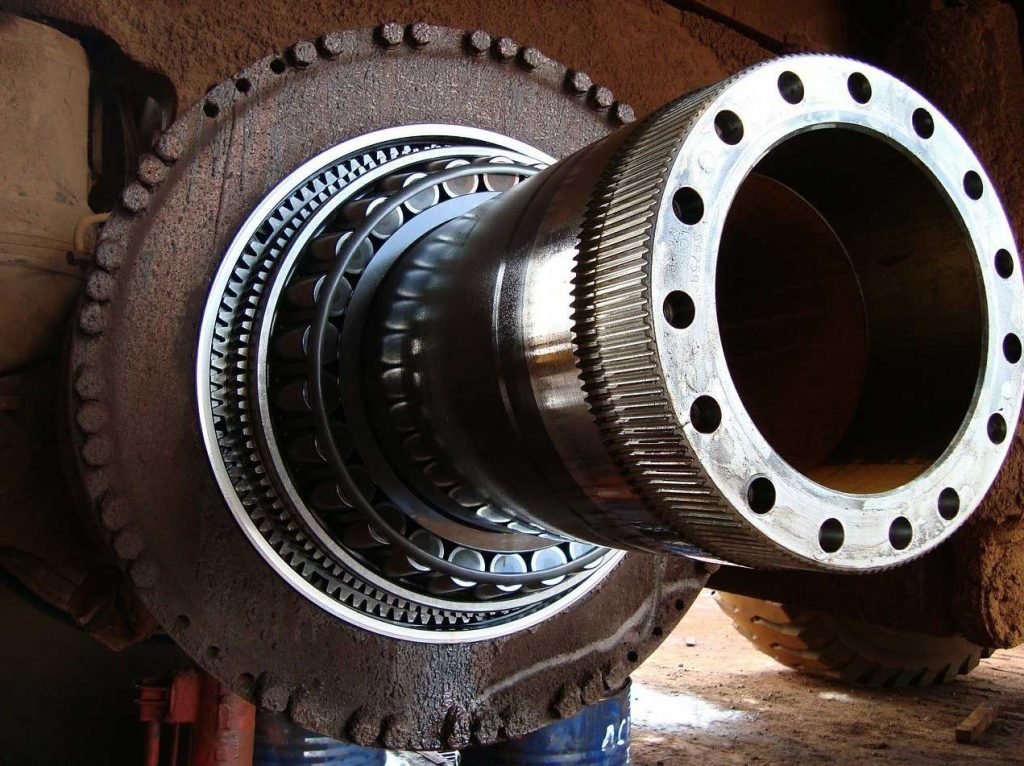
For rolling bearings between the axle journal and the bearing not film, but (most often steel made of) balls, rollers or other rolling elements to help you move quickly, easily and without obstacles.
Quality rolling bearings provide high precision and low friction, allowing high rotational speeds with lower operating noise, while reducing noise, heat, energy consumption and wear on components, making rolling bearings the most commonly used bearing type for axles and wheels.
Magnetic bearings
In such bearings controlled by electromagnet ensures the clearance between the journal and the bearing.
According to the direction of the load
Radial bearing
The bearing is subjected to radial load.
Axial bearing (support bearing)
The forces acting on the bearing from one or two directions axial load.
Radiax bearing
Simultaneous for both radial and axial loads.