
You may have read in our series of articles about how the rubber, this special spatial structure, flexible material. It also turned out to be not all rubber is the same, so the tyres made from them will have different properties. Today's feature also shows how rubber can be made into rubber by vulcanisation.
Ageing
Rubber manufacturing produces a rubber with properties optimised for the application, which lose their favourable properties over time and with use.
This is the deterioration of the properties of ageing, usually the result of irreversible chemical reactions. As the rubber ages, its mechanical properties deteriorate, making it easier to tear.
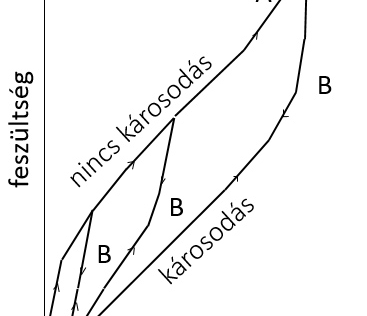
The molecular structure of rubber can be seen as a single coherent mesh. When the rubber breaks, it is always also leads to molecular disruption, which causes the formation of free chain ends, so that in some cases mechanical impacts can also trigger chemical reactions.
Ageing can be triggered by ultraviolet radiation in sunlight as well as by high temperatures or repeated cyclic mechanical stress. In order to avoid these effects, a rubber compound raw rubber also contains anti-ageing ingredients.
Vulcanisation
Before vulcanisation, the malleable but not very elastic raw rubber mixture made from rubber is mixed with vulcanising agents. During the vulcanisation process, cross-linkages are formed between the chain molecules of the raw rubber and the particles of the vulcanising agent, which change the structure of the material, reinforcing and highlighting the desired properties of the rubber.
In the vast majority of cases sulphur is the vulcanising agent, because it is cheap and easily available, but the vulcanisation process can also involve the use of tellurium, selenium, various metal oxides and even high-energy electromagnetic radiation.
Nowadays, vulcanisation is generally polymerised sulphur are used to make it easier to determine and shape the dynamic properties of the finished rubber.
The composite, the rubber other substances (e.g. steel- or textile skeleton, fasteners) are also made in the rubber factory, usually by attaching the raw rubber parts of the rubber compound to the other components and vulcanising them.
Tensile strength
Determined by the cohesive force between particles tensile strength of the rubber - because of its specific structure - not easy to determine. If the rubber were to break only from chemical bond breakage, it would have a tensile strength of 3000 MPa.
In contrast, in reality the rubber tears in such a way as to create a crack that spreads across the entire cross-section. Because of this specificity, a rubber with a tensile strength of 300 MPa is already considered strong.
Half of the world's rubber products are tyres, and the other half are rubber products, part of which are crane manufacturing product also used during the project: hoses, webbing, belts, gaskets, rubber plates, bumpers and more.