

In the first part of our article series, we explained where rubber comes from, how it has spread around the world and how the sap is extracted from rubber trees on plantations. But much more needs to happen before this material can become the rubber that everyone knows.
In order to understand the rubber manufacturing process, we also need a broad understanding of the molecular structure of rubber.
The structure of rubber
A rubber macromolecules can be best visualised by comparing them to threads. These are very small particles of polymers, are usually formed by polymerisation of one or two types of monomer.
The interaction between two adjacent rubber molecules is relatively weak, so the rubber polymers are in a continuous and random twisting and turning due to the conformational movement.
Stereoisomers that can be transformed into each other by rotation around bonds or that can be transformed under certain conditions are called conformational isomers, i.e. for compliant we call it. The internal rotation of molecules transforms one conformer into another conformer through an infinite number of conformational states. This internal rotation is called conformational motion.
When during the conformational movement, one rubber molecule comes close to another rubber particle, interact each other.
However, this interaction is usually quite weak and therefore not enough to keep it in one place, i.e. sort into crystal sections of the macromolecules of rubber.
The crystal content of rubber is therefore small compared to other materials (plastics or metals).
What gives rubber its elasticity?
Surprising as it may sound, a rubber is liquid and not flexible.
Although it is not a Newtonian fluid, so its flow (rheological) properties are different from those of water, rubber can still be considered a liquid. There are several reasons for this, the main one being that the rubber is very thick, also known as viscous material.
Sir Isaac Newton English physicist, mathematician, astronomer, philosopher and alchemist; one of the most prominent scholars of modern history. Among his other discoveries and research, he described the law of universal gravitation in his seminal 1687 work, The Mathematical Principles of Natural Philosophy, and established the science of classical mechanics through the axioms he laid down.
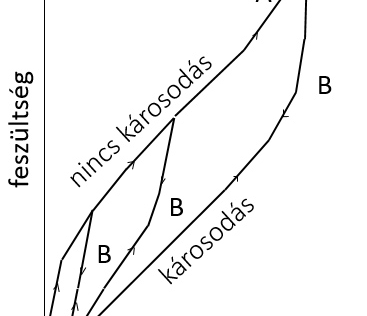
Stretching the rubber involves pulling the rubber molecule out of the neighbouring macromolecules.
The elasticity of rubber is caused by the fact that its molecules are never perfectly straight, and the „girbegurba” fibres are intertwined and „tangled”.
When the force that caused the stretching is removed, the macromolecules that have been pulled straight out are „pulled back in” again, which in turn somewhat reorders the structure of the rubber, but they do not return to their original position, the reordering after the force is never perfect.
Although in the chewing gum provide in all cases, deformation remains after, the extent of this can be reduced by vulcanisation, which is rubbera basic operation in the manufacturing process.
Tina Kersting image of the Pixabay -en.